
Supermarkets and retail shops
Queues move, cash reconciles at the end of every shift, and the stock room matches the shelf. Crystaline ERP has run Kenyan supermarkets for years; the web version keeps the same postings with a faster till.
The workflows, step by step
Opening the till
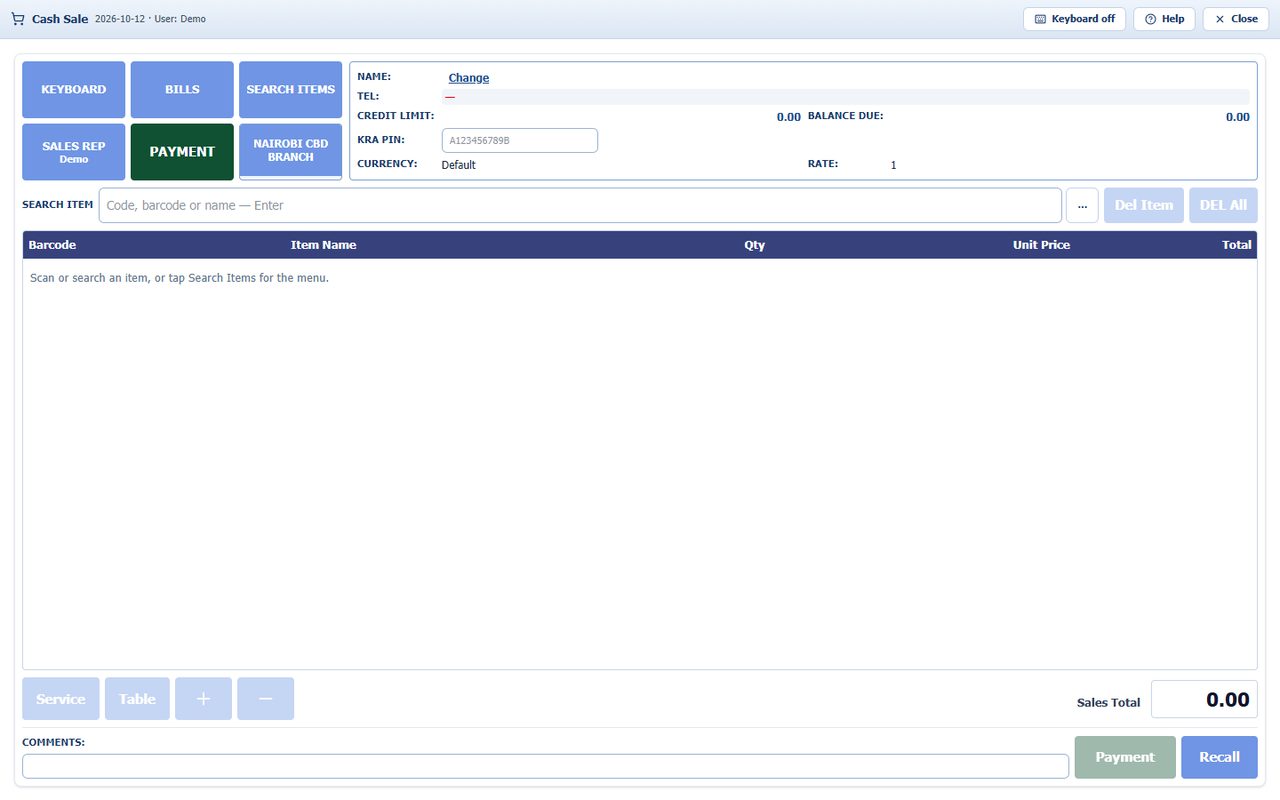
The cashier signs in on a registered till. Rights decide what they can do: change a price, give a discount, delete a line, sell below cost or open the drawer. Anything not granted is refused, or sent to a supervisor for authorisation.
Serving the queue
Scan, type a quantity, scan the next. Packs and single units carry their own barcodes and prices. Hold a sale when a customer runs back for something and recall it when they return. Happy-hour and quantity discounts apply themselves when configured.
Taking payment
Cash with change calculated, M-Pesa receipts matched to the sale, cards, vouchers and loyalty points, or a mix. Receipts print to a thermal printer; the desktop till app prints silently. A customer-facing display shows the running total.
Closing the shift
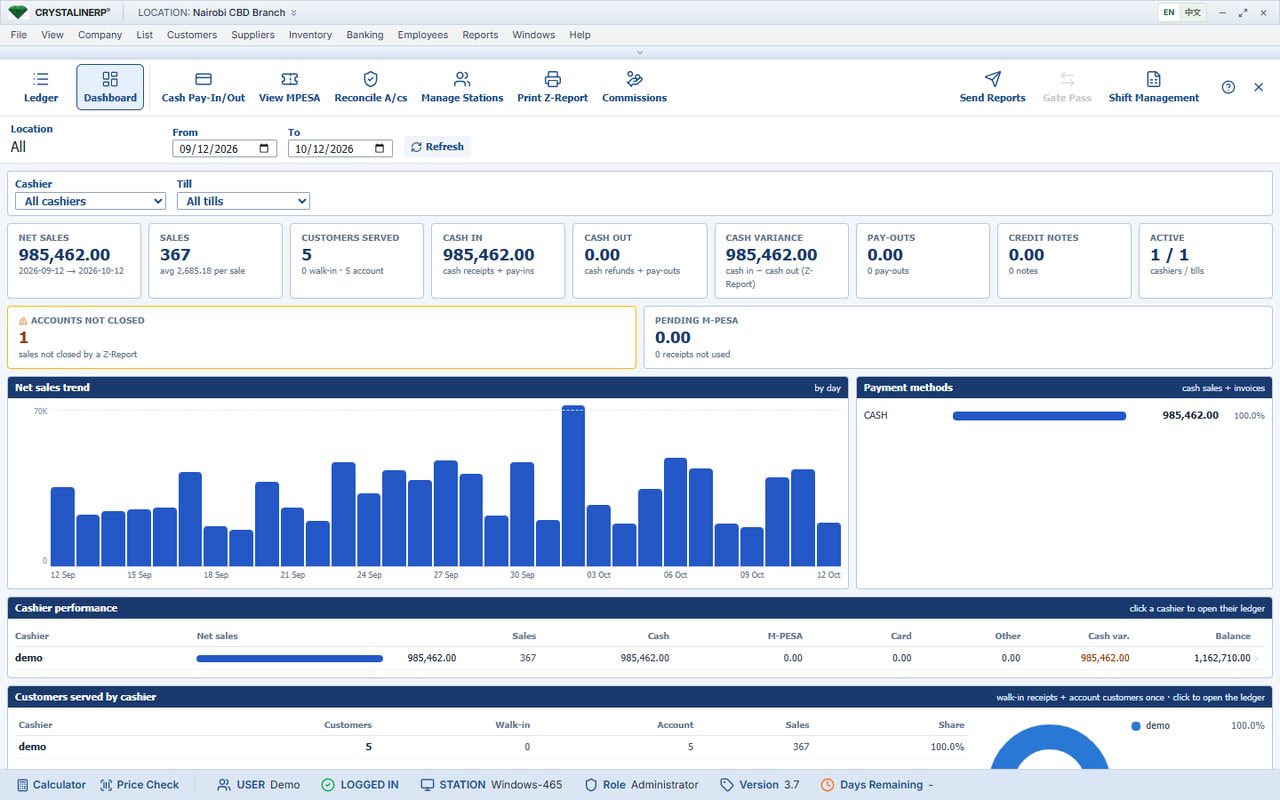
The Z-report compares what was sold with what was tendered per cashier and per payment method. Pay-ins, pay-outs and cash drops are on the same ledger. The cashier dashboard shows the variance before the cashier leaves.
Receiving deliveries
Receive against a purchase order or straight from the supplier's invoice. Costs and selling prices can be updated as goods arrive, with a markup rule per category. Returns and credit notes go back to the supplier account.
Controlling shrinkage
Stock-taking sheets freeze the expected quantity, count entry records the actual, and the summary shows the variance per item. Adjustments need a reason and a right. The movement audit trail shows every change to any item with the user and the document.
What the owner sees
- Today's net sales, cash in and out and variance per cashier, live
- Sales by department, category and item for any period, with margins
- Stock value at a date; items below reorder level; slow movers
- Pending M-Pesa receipts not yet matched to a sale
- A scheduled report email with the day's figures
Typical setup for a retail shop
- Server
- One Windows PC or small server in the shop, or a hosted account. Tills keep selling if the internet drops when the server is on site.
- Tills
- Any PC with a browser, or the Crystaline desktop till app for silent receipt printing and the cash drawer. Touch screens use the touch layout.
- Add-ons
- M-Pesa matching and STK push; KRA eTIMS signing; scheduled report emails.
- Hardware
- Thermal receipt printers (58 mm or 80 mm), barcode scanners, cash drawers, customer displays; supplied and priced separately.